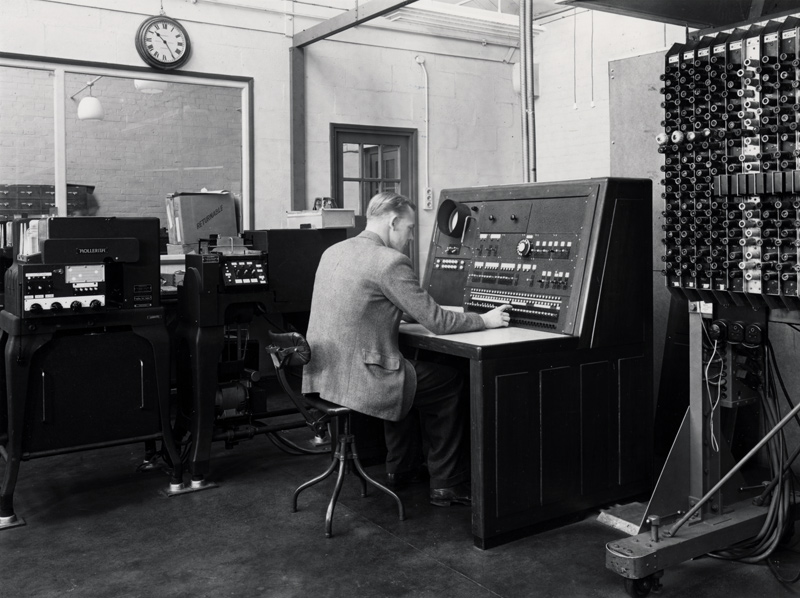
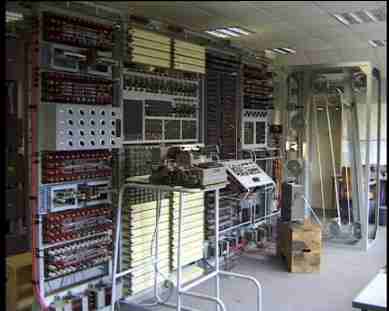
50 Years of CAD

In January, 1963, Ivan Sutherland, a PhD candidate at MIT, submitted his thesis, titled “Sketchpad: a man-machine graphical communication system,” describing his work in creating what is now recognized as one of the very first interactive CAD systems.
Sketchpad ran on MIT Lincoln Labs’ TX-2 computer. It was, at the time, one of the biggest machines in the world, with 306 kilobytes of core memory. It differed from most contemporary computers, in that it was designed to test human-computer interaction. In addition to the standard complement of I/O devices, the TX-2 had programmable buttons for entering commands, an oscilloscope/video display screen (addressable to 1024×1024 pixels), a light pen for input, and a pen plotter for output. It was, in a way, the first personal computer, albeit one that took up an entire building.
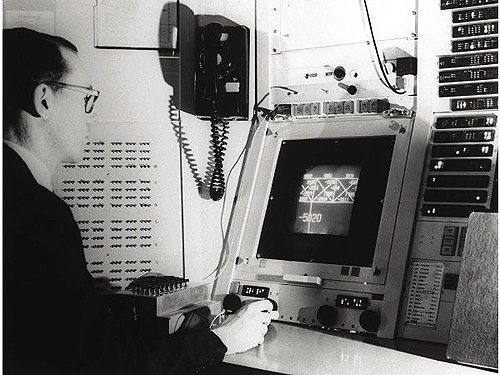
Sutherland-at-TX-2

Ivan Sutherland on MIT Lincoln Labs’ TX-2 computer.
Unlike earlier computer applications, which were batch oriented, Sketchpad was interactive. Using the light pen and input buttons, you could draw directly on the screen, using a crosshair cursor. The program supported points, line segments, and arcs as basic elements, but allowed these to be saved into master drawings, which could be copied or instanced. This facility was used to create alphanumeric character glyphs, and electrical schematic symbols.
One thing that made Sketchpad really stand out was its constraint management subsystem. It not only supported explicit constraints, added to entities after they were drawn, it supported implicit constraints, created as entities were drawn. For example, if you started to draw a line, and brought the cursor close to the endpoint of another line, it would snap to that endpoint. And it would remember that the two lines were connected. If, while editing, you moved one line, the other line would move with it.
Sketchpad included 17 different types of constraints, including vertical, horizontal, perpendicular, coincident, parallel, aligned, equal size, and more. These native (or “atomic”) constraints could be combined, to create more complex relationships. Sketchpad even allowed the visual display of constraints on screen, using icons (symbols) to represent each type.
With the constraint system, it was possible to loosely sketch a shape, then add geometric and topological relationships to modify it into the exact shape you needed. It was even possible to use constraints to do structural analysis of lattice trusses, such as might be found on cantilever and arch bridges.
bridges-diagram
Visually, Sketchpad was surprisingly interactive. It supported rubberbanding when drawing or editing entities (so the entities would stretch as you moved the cursor.) It supported dynamic move, rotate, and scale of entities (meaning that they moved, rotated, and scaled as you moved the cursor.) It not only supported zoom and pan (dynamically, of course), but did so transparently—even when you were in the midst of another drawing or editing operation.
Sketchpad was designed to be extensible, with provision for adding both new graphical element types, and new constraint types. Shortly after Sutherland submitted his Sketchpad thesis, Timothy E Johnson submitted his Masters thesis describing Sketchpad III, a 3D version of the program. About the same time, Lawrence G. Roberts submitted his PhD thesis, where he had added support to Sketchpad for 3D solids, including assemblies and real-time hidden line removal.
Timothy-Johnson-Sketch

Timothy E. Johnson
While it’s likely that Sketchpad would have gotten plenty of attention on its own, Sutherland, Johnson, and Roberts each made 16 mm movies, demonstrating their work. A combination of these films was used in a 30-minute program in 1964 for Boston TV station WBGH. (A film that appears to be an edited version of this is on YouTube. Just search for “Ivan Sutherland.”) Further, both Sutherland and Johnson presented papers on their work at the 1963 Spring Joint Computer Conference.
Sketchpad pioneered some of the most important concepts in computing, including the graphical user interface, non-procedural programming, and object-oriented programming. If you use a computer or smart phone, you’re using technology pioneered by Sketchpad.
Sutherland didn’t rest on his laurels after Sketchpad. He went on to run ARPA (the predecessor of DARPA.) He co-created the first virtual reality and augmented reality head-mounted display. He co-founded Evans and Sutherland, where he did pioneering work in the field of real-time hardware, accelerated 3D graphics, and printer languages. He was a Fellow and Vice President at Sun Microsystems. He taught at Harvard, University of Utah, and Caltech. Now, at the age of 74, he is heading up research in asynchronous computing at Portland State University.
sketchpad
circuits diagram
As a result of his work on Sketchpad, and his many subsequent contributions to computing, Sutherland has received a dazzling array of honors, including the National Academy of Engineering First Zworykin Award, the IEEE Emanuel R. Piore Award, the ACM Steven A. Coons Award, the ACM Turing Award, the IEEE John von Neumann Medal, and, most recently, the Kyoto Prize.
Alan Kay, himself a recipient of many honors for his pioneering work in computing, has described Sketchpad as “the most significant thesis ever done.” At one point, he asked Sutherland, “How could you possibly have done the first interactive graphics program, the first non-procedural programming language, and the first object-oriented software system, all in one year?” Sutherland’s response was “well, I didn’t know it was hard.”
What about CAD?
As easy as it is to trace the lines of influence from Sketchpad directly to Apple and Microsoft, it’s a little harder to trace the lines of influence from Sketchpad to today’s modern CAD systems. Mostly because those lines are so pervasive.
Anyone who went from MIT into the CAD industry in the 1960s or 1970s—and there were many people who did—was influenced by Sketchpad. Even Jon Hirschtick, a mid-1980s MIT graduate who went on to found SolidWorks, was influenced by Sketchpad.
Despite Sketchpad’s significance, no modern CAD systems actually trace their roots back to Sketchpad. There are a few good reasons for this: First, Sketchpad was a proof-of-concept program for human-machine interaction. Sutherland never intended it to be the basis of a commercial product. Second, Sketchpad was designed to run on the TX-2, a non-commercial research computer. It would have been difficult to port it to a commercial computer (and it’s questionable whether there were any commercial computers at the time that had sufficient capacity to run Sketchpad.)
The high costs of computing, and the lack of sufficiently good graphics display hardware made commercializing Sketchpad a practical impossibility. It wouldn’t be until 1969 that Applicon and Computervision were able to begin delivering commercial CAD systems that could actually produce drawings economically.
The deeper story
What I’ve written so far about Sketchpad could be found in Wikipedia, or in most simple histories of the CAD industry. But there is a deeper story. It starts with this observation: Sutherland never called Sketchpad a computer-aided design system. This, despite the fact that, among those supervising his work on Sketchpad were the very people who had coined the term, and defined the requirements, for Computer-Aided Design.
In December, 1959, The Mechanical Engineering Department and Electronic Systems Laboratory of the Electrical Engineering Department of MIT entered into a joint project, sponsored by the US Air Force, to explore the possibilities for something they called “Computer-Aided Design.”
The next year, in October, 1960, Douglas Ross, head of the Electronic Systems Laboratory’s Computer Application Group, published a technical memorandum titled “Computer-Aided Design: A Statement of Objectives,” laying out his vision. A month later, Steven Coons and Robert Mann, of the Mechanical Engineering Department’s Design and Graphics Group published a complementary memorandum, titled “Computer-Aided Design Related to the Engineering Design Process,” laying out their philosophy of approach. While each group had a somewhat different philosophy, their common goal was to evolve a man-machine system which would permit a human designer to work together on creative design problems.
At the time, MIT was uniquely qualified to take on this research project. They had the TX-0, a research computer that was optimized for exploring human-machine interaction, and, located at MIT Lincoln Laboratory was the TX-2, an even bigger research computer.
During the winter of 1960-61, Ivan Sutherland spent some time working on the TX-0, using its display and light pen. He got the idea that the application of computers to making line drawings would make an interesting PhD thesis subject. In the fall of 1961, Professor Claude Shannon signed on to supervise Sutherland’s computer drawing thesis. Among others on his thesis committee were Marvin Minsky and Steven Coons.
Though Sutherland was not a part of the MIT Computer-Aided Design Project, he was given tremendous support. Wesley Clark, then in charge of computer applications at Lincoln Laboratory, agreed to give him access to the TX-2. By November, 1961, Sutherland had the first version of Sketchpad working. This version, based on an internal project memorandum authored by Coons, could draw horizontal and vertical lines, and supported zooming of the display. In his thesis, Sutherland said “this early effort in effect provided the T-square and triangle capabilities of conventional drafting.” It was definitely more of a computer-aided drafting system than a computer-aided design system.
The version of Sketchpad described in Sutherland’s thesis was quite a bit more advanced than that first version. Based on a suggestion from Shannon, it supported both line segments and arcs. Sutherland also incorporated concepts developed by members of the Computer-Aided Design Project, including plex programming (a precursor to modern object-oriented programming), the Algorithmic Theory of Language, the Theory of Operators, and the Bootstrap Picture Language. This version of Sketchpad also included a constraint solver developed by Lawrence Roberts.
Sutherland gave a presentation on Sketchpad at the 1963 Spring Joint Computer Conference. Also speaking there were Coons, whose presentation was titled “An outline of the requirements for a computer-aided design system,” Ross and Jorge Rodriquez, who presented “Theoretical foundations for the computer-aided design system,” and Robert Stotz, who presented on “Man-machine console facilities for computer-aided design.”
Sutherland, like many other people who have accomplished great things, stood on the shoulders of giants. Clark had designed the TX-2, a computer perfectly suited to creating an interactive drawing program. Engineers at Lincoln Laboratory had optimized the design of light pens. Shannon had created information theory. Roberts had contributed solver technology. But it was Ross and Coons who provided Sutherland with many of the conceptual underpinnings that helped make Sketchpad really stand out.
Even though Sutherland wasn’t a member of the MIT CAD Project, Ross and Coons were happy to support and promote his work. They had a much larger vision for Computer-Aided Design, but Sketchpad was an excellent proof of concept, and reflected well on them.
Ross, writing in 1967, said “Sutherland’s skill, inventiveness, and diligence in expressing these powerful concepts in a smoothly functioning system, making maximum use of the powerful features TX-2 Computer, enabled Sketchpad to bring to life for many people the vast potential for computer-aided design. In particular, the widely distributed movies of Sketchpad in operation have had a profound influence on the whole field of computer graphics.”
The lessons of Sketchpad
Sutherland never wanted to create a computer-aided design system. He wanted to create a computer drawing system. That such a system could be used for drafting, or as a tool for engineering design was of secondary importance to him.
Sutherland, in his paper Technology and Courage, said “Without the fun, none of us would go on!” In Sketchpad, he went as far as he could with computer drawing software while still having fun. Taking it further would have been more like work than fun (as many CAD developers have discovered over the last 50 years.) In the process of creating Sketchpad, Sutherland discovered that the most challenging impediment to making such a system practical was in the performance of its display system. In 1968, he co-founded Evans and Sutherland, and tackled that problem.
Sutherland created two versions of Sketchpad: one that did drafting, and one that did design. Even today, people who see the movies of the design version of Sketchpad are blown away by its capability. Yet, what capabilities do they look for when they go to buy 2D CAD software? Drafting.
Over time, a number of companies have developed Sketchpad-like 2D design programs featuring constrained sketching. They’ve mostly failed in the market. At the same time, AutoCAD, a simple 2D drafting program grew to become the world’s most popular CAD program. It only got constraint capabilities in 2010—some 47 years after Sketchpad had them.
The place where Sketchpad-like capability has found acceptance is in 3D feature-based modeling. The sketching modules for programs such as Pro/E and SolidWorks are very much like Sketchpad. At least, in capability. Where they fail in comparison to Sketchpad is in extensibility.
Possibly the most valuable lesson from Sketchpad may be taken from the observation that Sutherland actually built two versions of the software. When he found that the first version couldn’t be easily modified to do what was required, he started over, and built on a clean—and carefully designed—software architecture.

If you’d like to learn more about the history of CAD, including Sketchpad and the MIT CAD Project, visitwww.designworldonline.com/cadhistory.
There, you’ll find copies of the original documents that launched the CAD industry, including, for the first time since they were published in 1961, downloadable versions of the original MIT technical memos on Computer-Aided Design by Doug Ross, Steven Coons, and Robert Mann. You’ll also find a free downloadable version of David Weisberg’s 667 page authoritative history of the CAD industry, The Engineering Design Revolution.

Supersonic Ping-Pong gun fires balls at Mach 1.2

Few things capture the attention of physics students like a gun that fires Ping-Pong balls, according to a mechanical engineer who just built one that accelerates the balls to supersonic speeds. 

“You can shoot Ping-Pong balls through pop cans and it is great, it is so captivating, it is so compelling that you can get kids’ attention and once you’ve got their attention, you can teach them something,” Mark French, the Purdue University assistant professor who built the gun, told NBC News.
The guns typically work by sealing a slightly-larger-than Ping-Pong-ball-diameter tube with packaging tape and sucking all the air out to create a vacuum. Once the seal is broken on one end, air rushes into the tube and pushes the ball down the barrel.
“The ball doesn’t fit tightly in the tube, a little bit of air gets past the ball and when it gets to the seal at the other end, that little puff of air gets compressed and blows the seal out of the way so the ball can come out at 600 or 700 feet a second,” French explained.
After getting tons of mileage in class over the past few years — as well as a divot or two in his classroom wall — with a gun he built based on a design in scientific journal, he started thinking that he could make the ball come out even faster. And, well, faster is better.
The trick, he figured, was to get the air that pushes the ball out the tube (gun barrel) to move faster. To do this, French borrowed a nozzle design with a pinch in the middle that aerospace engineers use to get air moving at supersonic speeds in their wind tunnels.
As air enters the so-called convergent-divergent or de Laval nozzle, it accelerates as it is compressed, reaching supersonic speeds as the nozzle expands. 
“I thought, okay, I’m going to treat this thing like a little wind tunnel,” he said. 
To do so, he put a convergent-divergent nozzle at the opposite end of the tube from where the ball exists and behind that, a pressure chamber made out of PVC tubing. 
When the chamber is pumped up to about 45 pounds per square inch, it breaks the seal.

“That pressurized air goes through the nozzle just like it does in a supersonic wind tunnel and accelerates to supersonic speed out the other end and pushes the ball ahead of it,” he said. 
“At least, that’s what we think is going on,” he added. “We haven’t done any analyses on this … we are still doing some more tests … but whatever is going on, it is definitely coming out at Mach 1.23.”
Yes, that’s fast; faster than F-16 flying at top speed at sea level, noted MIT’s Physics xrXiv Blog
French and colleagues Craig Zehrung and Jim Stratton describe the gun in a paper posted Jan. 22 onarXiv.org, a server where pre-prints of scientific papers are posted. 

* John Roach is a contributing writer for NBC News.  (Enero 2012)

Se descubre un agujero negro gigante que rompe las leyes del universo

Astrónomos detectaron un agujero negro donde cabrían 17 millones de estrellas como el Sol


Científicos europeos han descubierto un agujero negrosúper masivo con una masa equivalente a 17.000 millones de soles, situado en el centro de una pequeña galaxia, informó hoy la revista científica “Nature”.

El agujero, detectado por un equipo del Instituto Max Planck para Astronomía (Heidelberg, oeste de Alemania), se encuentra en el centro de la galaxia NGC 1277, en la constelación de Perseoa 220 millones de años luz.
“Es uno de los agujeros negros más grandes que se ha observado hasta ahora y cientos de veces mayor de lo que estimábamos para una galaxia de este tamaño”, afirmó el astrónomo holandés Remco van den Bosch, que lidera la investigación.
ROMPIENDO LAS REGLAS DEL COSMOS
Los científicos creen que la mayoría de las galaxias, incluida la Vía Láctea, albergan en su seno un agujero negro súper masivo, y hasta ahora han hallado alrededor de noventa candidatos que podrían serlo.
Según esta hipótesis, la masa de este tipo de agujeros negros representa alrededor del 0,1% de la masa total del bulbo estelar de su galaxia, o sea, del grupo central de estrellas que la conforma.
Sin embargo, la masa del agujero descubierto por Remco van den Bosch y su equipo supone el 14% de la masa total de su bulbo galáctico, 3 puntos más que el agujero más masivo descrito hasta ahora.
ES UNA AUTÉNTICA RAREZA
La diminuta galaxia, cuya masa es sólo una décima parte de nuestra Vía Láctea, “es una auténtica rareza” ya que “casi toda ella es un agujero negro y podría ser el primer objeto en un nuevo tipo de sistemas de galaxias-agujero negro”, señaló por su parte Karl Gebhardt de la Universidad de Texas (EE.UU.).
De hecho, el agujero descubierto es tan masivo que las estrellas que lo rodean se desplazan muy rápido y superan los 100 kilómetros por segundo (360.000 kilómetros por hora).
“La mayoría de estas estrellas están fuertemente influenciadas por la gravedad de su agujero negro, lo que hace que la galaxia sea muy compacta”, apuntó Van den Bosch, quien cree que este hallazgo “podría cambiar las teorías sobre cómo las galaxias se forman y evolucionan”.
* EFE, Londres

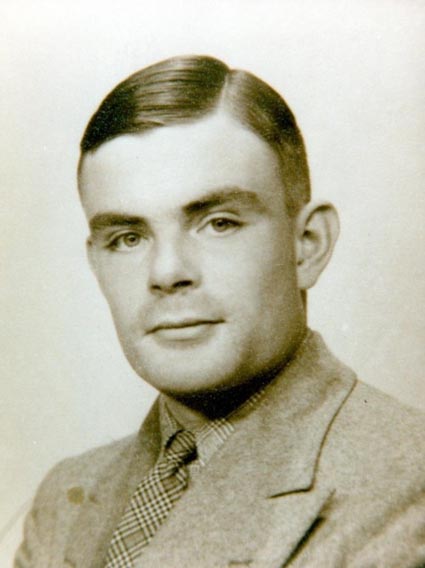
Alan Turing, padre de la informática

Creo que es muy importante destacar las biografías de personas que dejaron huellas en los diferentes campos de estudio o interés humano. En este caso la Ciencia y tecnología.No importa que ya no estén con nosotros, no importa que sean parte de una historia que las nuevas generaciones No consideran o quieren olvidar.

Lo importante es tener en cuenta que el progreso de la ciencia y tecnología no se debe al aporte de un Único país o persona, sino del aporte de todos, países y personas, en mayor o menor medida; pero aporte al fin. 

Por tanto el destacar lo positivo de algunas de esa multitud de personas, Científicos, ingenieros y técnicos en este Blog, es algo que no solo es un reconocimiento publico; sino una obligación de dejar realidades y bases solidas a las nuevas generaciones de humanos que sigan este camino o que quieran saber cual es el origen o la razón de todos estos logros en Ciencia y tecnología.

Hasta siempre.
Carlos Tigre sin Tiempo = CTsT

*********************************************************************************

La ciencia y la tecnología conmemoran a Alan Turing, padre de la informática

La comunidad científica y tecnológica conmemora el centenario del amado padre de la computación moderna, el genio matemático británico Alan Turing, cuyos decisivos trabajos de descodificación de mensajesfueron claves para vencer a la alemania nazi durante la Segunda Guerra Mundial.
El 23 de junio se celebra el centenario de su nacimiento en Londres, y muchas ciudades han organizado conferencias y exposiciones para rendir homenaje a la labor de un hombre considerado un auténtico genio de las matemáticas, pero que fue perseguido durante toda su vida por su homosexualidad.

«Turing es probablemente la única persona que ha hecho contribuciones que han cambiado el mundo en los tres tipos de inteligencia: la del ser humano, la artificial y la militar», afirmaba en un editorioal reciente la revista prestigiosa científica Nature.

Turing murió a la edad de 41 años, envenenado con cianuro (hay dudas sobre si se suicidó realmente, como comunmente se afirmaba hasta ahora), tras ser declarado culpable en 1952 por «indecencia grave» debido a su homosexualidad -ilegal en el Reino Unido en ese momento- y ser sometido castración forzada química. Hay que destacar que el gobierno británico no pidió explícitamente perdón por el trato cruel, discriminatorio e «inhumano» que recibió el científico hasta nada menos que 2009.
Algunos creen que el científico, conocido por su excentricidad, se suicidó en 1954 al comer una manzana envenenada, pero nunca se pudo probar. En cualquier caso, el monumento dedicado a él cerca de la Universidad de Manchester le representa en un banco y con una manzana en la mano.

Poseedor de una privilegiada intuición, Turing sentó las bases de la computación moderna y los criterios para la inteligencia artificial, además de ser conocido sobre todo por romper los códigos utilizados por el ejército alemán y su máquina codificadora Enigma, algo que salvó millones de vidas al acortar la II Guerra Mundial.

Pero su trabajo va más allá. En 1936, Turing, que había anunciado planes para «construir un cerebro», publicó un artículo describiendo la «máquina universal de Turing»; Fue el primero en considerar la posibilidad de programar una máquina mediante ‘datos’ de modo que puedan llevar a cabo otras tareas al mismo tiempo, al igual que los ordenadores de hoy en día.
De hecho, Google cambia su logotipo hoy, a modo de homenaje, con un espectacular ‘doodle’ que emula precisamente esa ‘maquina de Turing’ que planteó de forma teórica.
Cuando fue construida finalmente por otros científicos en 1950, la primera versión del motor de Computación Automática (ACE) de Turing fue la máqina computadora más rápida del mundo.

* Texto de Marietta Le Roux (Afp) | ELMUNDO (Paris-Madrid)

Científicos españoles descubren un nuevo material láser aplicable en medicina

Elimina la necesidad de usar grandes volúmenes de disolventes orgánicos, «la mayoría tóxicos y carcinogénicos»


Un equipo de la Facultad de Ciencia y Tecnología de la Universidad del País Vasco (UPV/EHU), investigadores del Consejo Superior de Investigaciones Científicas (CSIC) y la Universidad Complutense de Madrid (UCM) han desarrollado un nuevo material láser que tiene aplicaciones en campos tan diversos como la medicina, la agricultura o las ciencias ambientales.

Este nuevo material láser elimina la necesidad de utilizar grandes volúmenes de disolventes orgánicos, «la mayoría tóxicos y carcinogénicos», según han informado desde la Facultad de Ciencia y Tecnología del Campus de Vizcaya.

Basado en la creación de imágenes, detección, análisis y manipulación de sistemas biológicos a través de la luz, el nuevo material mejora la eficiencia y la estabilidad de los colorantes comerciales que se emplean en biofotónica.

Además, el trabajo realizado por los investigadores ha sido publicado en la revista «Nature Photonics».
«Eficiente y duradera»

En este sentido, los científicos han obtenido «por primera vez» una emisión «eficiente y duradera» de luz láser roja gracias a la incorporación de dos moléculas colorantes que se presentan confinadas en nanopartículas de látex dispersas en agua.

Según han explicado, «la longitud de onda de la luz roja es clave para la terapia fotodinámica, con usos, por ejemplo, en oftalmología y dermatología».

«La utilización, en biomedicina, de emisores de luz roja, con una longitud de onda superior a 650 nanómetros, tiene ciertas ventajas ya que los tejidos biológicos son más transparentes a ella y la luz puede profundizar más, lo que facilita su uso en cirugía y en tratamientos de terapia fotodinámica, basados en la activación por luz de medicamentos ingeridos», ha explicado el investigador del CSIC Luis Cerdán, que trabaja en el Instituto de Química Física Rocasolano y pertenece al grupo que ha llevado a cabo la caracterización láser y el estudio teórico.

El uso de colorantes comerciales para estas aplicaciones estaba limitado, hasta ahora, «por la poca luz de excitación que absorbían», un inconveniente que reducía su eficiencia.

Asimismo, los colorantes «suelen dañarse con facilidad cuando son excitados, lo que reduce su utilidad tecnológica y hace aumentar el coste económico».

Para resolver estos problemas, los científicos han recurrido a un proceso de transferencia de energía conocido como Förster Resonance Energy Transfer (FRET, por sus siglas en inglés), basado en incorporar dos colorantes: uno donador, capaz de absorber eficientemente la excitación y que apenas se daña, y otro aceptor, que emite luz tras haber recibido la energía del primero.

Según ha explicado el investigador de la UCM Eduardo Enciso, que ha llevado a cabo la síntesis de las nanopartículas y colaborado en el análisis teórico, «empleamos los colorantes Rhodamina 6G como donador y Azul de Nilo como aceptor. Para garantizar la proximidad de los colorantes y, por tanto, una mayor eficiencia, los confinamos en nanopartículas poliméricas de 50 nanómetros de diámetro dispersas en agua».
Vida útil

En este sentido, Enciso ha añadido que «al integrar los colorantes en estas estructuras se reducen los procesos que degradan sus moléculas tras ser excitadas por la luz, una situación especialmente grave en los colorantes con emisión roja, lo que además evita la pérdida de sus propiedades de emisión y multiplica por ocho su vida útil».

Por otro lado, la caracterización fotofísica ha permitido estudiar el proceso de transferencia de energía en el sistema, que se produce «muy rápidamente», por debajo de los 500 picosegundos (un picosegundo es la billonésima parte de un segundo).

Según los investigadores Jorge Bañuelos e Iñigo López Arbeloa, que han llevado a cabo esta parte de la investigación en la Facultad de Ciencia y Tecnología de la UPV/EHU, «el mecanismo de transferencia de energía es muy complejo, ocurre principalmente por la interacción de los dipolos eléctricos de los colorantes donadores y aceptores y se produce a una distancia media de tres nanómetros».


El robot Curiosity se comunica desde la superficie de Marte

A pesar de las dificultades y de la incertidumbre por la utilización de un método de aterrizaje novedoso, las cosas se desarrollaron de la forma prevista y el robot Curiosity se posó sin novedad en la superficie de Marte, a las 05:31 UTC del 6 de agosto (hora de la Tierra).

Todo fue bien en la secuencia de descenso y la compleja sonda espacial, a la que le sobró casi el 25 por ciento del combustible almacenado a bordo, tocó la superficie en un punto estimado cuyas coordenadas son 137,44 grados (longitud), -4,59 grados (latitud), en el interior del cráter Gale. Apenas unos minutos después, el robot, demostrando el éxito de la maniobra, enviaba sus primeras fotos de baja resolución a través de la sonda Mars Odyssey, que pasaba en esos momentos sobre ella. Las imágenes, que aún mostraban el polvo en suspensión levantando por el aterrizaje, enseñaban las ruedas del vehículo y su sombra, así como un escenario aparentemente libre de rocas.

La llegada del Curiosity se inició el 4 de agosto, con la entrada de la nave en la esfera de influencia gravitatoria de Marte. Eso la hizo acelerar progresivamente. Los ingenieros no necesitaron utilizar sus últimas oportunidades de corrección de la trayectoria, que consideraron perfectamente establecida. Por fin, a las 05:14 del 6 de agosto, la Curiosity abandonó la etapa de crucero que había estado utilizando durante el viaje, desde el día del despegue, y que había proporcionado energía, comunicaciones y propulsión al conjunto. Cinco minutos más tarde, se expulsaban dos pesos (CMBD) de 75 kg cada uno utilizados para mantener el equilibrio, los cuales se estrellarían por su cuenta contra Marte. De este modo quedaba desplazado el centro de masas de la nave y se obtenía una cierta sustentación. A las 05:24 UTC, el vehículo, equipado con su escudo de protección térmica, efectuaba su primer contacto con la atmósfera marciana, a unos 125 km de altitud y a una velocidad de 6,1 km/s, a 700 km de distancia del punto de aterrizaje. Cuatro minutos después, se expulsaban otros seis pesos de 25 kg para orientar correctamente la nave, y al mismo tiempo se extendía el paracaídas, a unos 10 km de altitud y una velocidad de 100 m/s. Con la evidente desaceleración en marcha, se liberó el escudo térmico inferior (05:29 UTC), y finalmente la carcasa superior junto al paracaídas, que había reducido suficientemente la marcha del descenso para que pudieran entrar en servicio los ocho motores de la “grúa espacial” (05:30 UTC). Con la velocidad de bajada a cero, el vehículo se mantuvo a unos 27 metros de altura y empezó a descolgar al robot Curiosity con varios cables. Una vez extendidos, se reanudó la bajada, hasta que éste tocó el suelo, a unos 0,75 m/s, los cables se cortaron y la grúa se alejó de la zona para estrellarse.

[Img #9258]

(Foto: JPL)

De inmediato, el robot utilizó las cámaras de navegación para tomar algunas imágenes, aún con la óptica tapada por una cubierta transparente, que evitó que el polvo la ensuciara. Unos tres minutos después del aterrizaje, estas imágenes fueron transmitidas a la Tierra y mostradas en el centro de control, que las recibió de forma entusiasta.

Se trataba de imágenes en blanco y negro, ya que la cámara principal se encontraba aún plegada en su mástil, lo mismo que la antena de alta ganancia, que permitirá el contacto directo con la Tierra, sin pasar por las sondas en órbita alrededor de Marte. Hasta entonces, los controladores estarían limitados a la recepción de datos en las oportunidades de sobrevuelo de la MRO, la Mars Odyssey y la Mars Express.

Tras la rueda de prensa, regresó la actividad al centro de control, con un nuevo sobrevuelo de la Mars Odyssey que trajo más fotografías, de mejor calidad, y algunos datos científicos. En sucesivas oportunidades se enviarían otros elementos interesantes, como las imágenes tomadas durante el descenso propiamente dicho.

Los próximos días estarán protagonizados por un cuidadoso calendario de eventos, durante los cuales, poco a poco, se comprobarán todos los sistemas del robot, se establecerán comunicaciones estables y se enviarán imágenes de alta calidad y panoramas. Aún transcurrirán algunos días antes de que el Curiosity inicie sus primeros movimientos.

Durante la rueda de prensa, la dirección del programa no solamente felicitó a los participantes estadounidenses, sino también a las naciones colaboradoras, entre las cuales se encuentra España, que ha contribuido con varios elementos. Uno de ellos es la antena de alta ganancia, de diseño novedoso, construida por Astrium España.

Llevar a cabo la transmisión de datos desde Marte a la Tierra es más difícil de lo que parece. El rover tiene que saber dónde se encuentra en cada momento para saber dónde está la Tierra y apuntar hacia ella para comunicarse. El Curiosity ha incorporado la novedad de que es la antena la que se orienta automáticamente apuntando a la Tierra para poder comunicar sus datos. De esta manera, el rover no tiene que gastar energía moviendo todo el vehículo para apuntar su antena.

Curiosity tiene la capacidad de comunicarse directamente con la Tierra a través de sus enlaces en banda X con la red de espacio profundo compuesta de tres antenas gigantes de 70 metros dispuestas estratégicamente en el planeta (Pasadena, Canberra y Madrid) para que por lo menos siempre haya una en la línea de vista de la transmisiones.

Las comunicaciones en banda X utilizan un amplificador de potencia de 15 vatios alimentado por el transpondedor de espacio profundo del rover. España, a través de EADS CASA Espacio, filial de Astrium, ha suministrado la antena de alta ganancia, de forma hexagonal de unos 30 centímetros de diámetro, montada en la plataforma superior del Rover. Con esta antena, se puede transmitir a 800bits por segundo o más rápido a las antenas de 70 metros de la red de espacio profundo. Esta antena se basa en la tecnología de radiadores impresos desarrollada por la empresa, tiene capacidad de transmisión y recepción, y ha demostrado sus altas prestaciones en misiones de observación como Envisat, de telecomunicaciones como Galileo y Spainsat y científicas como Rosetta. Además tiene la citada capacidad de apuntamiento automático gracias al mecanismo especial suministrado por la empresa Sener. Esta antena será utilizada para enviar órdenes al rover todas las mañanas. Así mismo, podrá utilizarse para devolver información a Tierra a un bajo nivel de transmisión de datos debido a la limitada potencia del rover, el tamaño de la antena y la gran distancia que les separa.

Otra posibilidad de comunicarse que tiene Curiosity es a través de sus enlaces UHF contactando con los satélites que orbitan Marte. Son oportunidades cortas de unos 10 minutos, pero su proximidad permite una transmisión más rápida de datos que el contacto directo. Estos orbitadores con sus transmisores de mayor potencia y antenas de mayor tamaño retransmitirán esta información posteriormente a la red de espacio profundo en la Tierra. Uno de estos satélites puede ser el Mars Express de la Agencia  Espacial Europea que también cuenta con una antena dicroica de CASA Espacio.

La estación meteorológica del vehículo es asimismo una aportación española, desde el investigador científico principal hasta la construcción del mismo por la otra filial española de Astrium, CRISA, en Tres Cantos. Con ella se medirán diariamente todos los parámetros atmosféricos que se tomarán en cuenta para llevar a cabo la misión, que tendrá una duración de un año marciano (dos años terrestres).


(Foto: NASA)(Foto: NASA)La Curiosity bajo su paracaídas, vista por la sonda MRO. (Foto: NASA/JPL-Caltech/Univ. of Arizona)El escudo de la Curiosity, en el momento de ser expulsado, durante el descenso. (Foto: JPL)Primera foto. (Foto: NASA)(Foto: NASA)Primera imagen en color tomada por el Curiosity. (Foto:  NASA/JPL-Caltech/Malin Space Science Systems)(Foto: NASA/JPL-Caltech/Univ. of Arizona)


Copyright © 1996-2012 Amazings® / NCYT® | (Noticiasdelaciencia.com / Amazings.com). Todos los derechos reservados. 

Plantas muy ‘humanas’

En su último libro, titulado “Qué sabe una planta” Daniel Chamovitz, doctor en biología y director del Centro de Biociencias de la Universidad de Tel Aviv, nos revela que las plantas pueden sentir el entorno, tomar decisiones ‘inteligentes’ y  comunicarse unas con otras a través de un sorprendente lenguaje químico.


La genética de las plantas no es tan diferente de la del ser humano. En una entrevista publicada en Scientific American, Daniel Chamovitz explicaba: estos (descubrimientos) me han llevado a darme cuenta de que la diferencia genética entre las plantas y los animales no es tan significativa como yo ingenuamente había creído una vez. Así que, mientras todavía no estaba investigando este campo, ya comencé a cuestionarme los paralelismos entre las plantas y la biología humana.

Y añadía: las plantas tuvieron que desarrollar mecanismos sensoriales muy sensibles y complejos que les permiten sobrevivir en ambientes cambiantes (…). Ellas necesitan ver dónde está su comida; necesitan sentir el clima y ser capaces de oler los peligros. Y  tienen que ser capaces de integrar toda esta información de forma dinámica y cambiante. El hecho de que no vemos a las plantas moverse no significa que su mundo interior no se rico y dinámico. Y a enseñarnos eso dedica Chamovitz su último libro,  “Qué sabe una planta”, a mostrarnos ese mundo interior rico y dinámico de estos seres vivos.
Cada capítulo está dedicado a explorar las similitudes entre los sentidos humanos y los de las plantas. Así, vemos que el primer capítulo, titulado “Lo que ve una planta”, comienza de una forma provocativa con esta afirmación: “Piensa sobre esto: las plantas pueden verte.” En este capítulo se explica cómo las plantas pueden distinguir entre los diferentes tipos de colores. También encontramos páginas dedicadas a explorar las similitudes entre el resto de los sentidos  humanos. El autor afirma que las plantas pueden sentir y diferenciar los distintos aromas o que también tienen sentido del tacto, porque saben cuándo son acariciadas.
Acacias que ‘ganan’ a antílopes
De la misma manera que los telescopios ampliaron nuestra visión del universo, las investigaciones de este tipo nos permiten abrir la concepción que tenemos de la mente, de los sentidos y de la conciencia.  En este sentido, el trabajo de Daniel Chamovitz no es el único.  Hay muchas personas en diferentes países, y desde diferentes campos, que llevan años investigado ese mundo interior dinámico y rico de las plantas.
Stefano Mancuso es una de ellas. Ingeniero agrónomo y doctorado en biofísica, desde su laboratorio situado cerca de Florencia (Italia) estudia, junto con un grupo de colaboradores, lo que hasta hace muy poco tiempo era una pregunta más del mundo de la alquimia que de la ciencia moderna: ¿tienen las plantas alguna especie de sistema nervioso capaz de transmitir información y un cerebro capaz de procesar esa información y dar respuesta inteligente a los problemas? Sabemos que las plantas son capaces de sentir el entorno. De hecho, según Mancuso, siente más que algunos animales. “Cada ápice de la raíz puede detectar simultánea y continuamente por lo menos 15 parámetros químicos y físicos. Es algo que los animales no pueden hacer”, señaló.
Sabemos, que esa información viaja desde los ápices hasta las hojas más lejanas. Esta afirmación la confirmó el profesor Stanislaw Karpinski, quien  afirmó, en una reunión de la Society for Experimental Biology’s en Praga (República Checa), que cuando se ilumina una sola hoja, toda la planta recibe esa información. Lo cual confirma, que esa información es transportada en forma de señal electroquímica  por células que actúan como un  sistema nervioso.
Pero eso no es todo lo que una planta puede hacer. El profesor Mancuso explicaba en una entrevista al periódico “La  Vanguardia”: cuando una planta es atacada por un patógeno, inmediatamente produce moléculas volátiles que pueden viajar kilómetros, y que avisan a todas las demás para que preparen sus defensas. Lo que significa que  las plantas pueden comunicarse entre ellas de una forma muy eficaz.
Uno de los mejores ejemplos, añadía el biofísico, fue el ocurrido en Botsuana. “Hace diez años, en Botsuana introdujeron en un gran parque 200.000 antílopes, que comenzaron a comerse las acacias con intensidad. Tras pocas semanas, muchos murieron y al cabo de seis meses murieron más de 10.000, y no advertían por qué. Hoy sabemos que fueron las plantas.”

Si lo analizamos esto noticia cuidadosamente; nos daremos cuenta de que fue una respuesta muy compleja. Según estos datos, las acacias sintieron el peligro y respondieron a éste produciendo unas moléculas con la información adecuada, que emitieron al entorno. Las otras plantas tuvieron que detectar esas moléculas e interpretar correctamente el mensaje para construir una defensa adecuada.  Una protección que se basó en modificar su propio organismo, concentrando gran cantidad de tanino. La conclusión más lógica es que actuaron de esta manera para defenderse de los antílopes y, por lo tanto, con intencionalidad. Si la intencionalidad es, según la psicología, uno de los atributos de la conciencia, esto nos lleva de vuelta a la pregunta central del libro de Daniel Chamovitz: ¿tienen conciencia las plantas?
Cierta inteligencia animal
Y, aunque hoy día nos parezca sorprendente, esta misma pregunta se planteó hace siglos sobre las mujeres o sobre otras etnias. Con el tiempo, se llegó a admitir lo obvio y, un poco más tarde, nos preguntamos lo mismo sobre los animales. Se observó que, algunos, como los  primates, son capaces de utilizar herramientas, tienen un lenguaje y pueden  comunicarse entre ellos. Además emplean estrategias de defensa y de búsqueda de alimentos y se organizan para cuidar y enseñar a sus crías. Y, después de estos trabajos de investigación, se llegó a la conclusión de que, efectivamente, los animales, algunos más que otros tienen un cierto tipo de inteligencia.
En el mundo de los  insectos encontramos cosas sorprendentes. Las arañas, por ejemplo, son un caso excepcional en el campo de la ingeniería y de la química.  Un grupo de científico de la Universidad Técnica de Múnich (Alemania) ha descubierto que la tela de araña es cinco veces más tensa y fuerte que el acero y tres veces más que las mejores fibras sintéticas. Otros insectos, las hormigas y las abejas, además de ser capaces de construir grandes dispositivos arquitectónicos como son las colmenas con pasillos, sistemas de ventilación, control de temperatura y humedad, además tienen lo que ahora llamamos habilidades sociales, es decir, saben llevarse bien.
Pero, ¿qué hay de las plantas? La respuesta del propio Mancuso en una entrevista, realizada por Eduard Punset, nos puede ayudar a encontrar la respuesta adecuada.
“Si ahora analizamos el organismo en su conjunto, yo diría que la diferencia entre las plantas y los animales no es una diferencia cualitativa sino meramente cuantitativa: lo único que cambia es la cantidad. Si hablamos de inteligencia, la cantidad de inteligencia es baja en las plantas, pero sí que existe. Si hablamos de velocidad, de tipo de movimiento, también existe en las plantas, aunque a una escala distinta.”

Será la conciencia, al igual que el movimiento, la inteligencia o la memoria, una cuestión de cantidad.  El Premio Nobel de física, Erwin Schrödinger, mantiene que la conciencia, al igual que la atención, es de ese tipo de cosas que se da en grados. Así, en su libro “Mente y Materia” afirma que “existen grados intermedios entre lo puramente consciente y lo totalmente inconsciente“. Para ello, observemos nuestro nivel de conciencia. A veces somos conscientes de que tenemos rodillas, corazón o pulmones pero, la mayor parte del tiempo, somos completamente inconscientes de su existencia. Incluso cosas tan vitales como respirar, caminar, e incluso, conducir, comer o hablar por teléfono lo podemos hacer con poca, mucha o de forma totalmente inconsciente. Por tanto, entre estos dos extremos, lo puramente consciente y lo totalmente inconsciente, existen una infinita graduación.
Necesaria reflexión
El siguiente paso ahora es un misterio. Tampoco, en su momento, sabíamos a dónde nos iba a llevar aceptar que la Tierra no era plana, o que el Sol era el centro de nuestro sistema, por no hablar de la Teoría Cuántica o la de Relatividad. Como decía el matemático francés, Henri Poincaré, “dudar de todo o creerlo todo son dos opciones igualmente cómodas, pues tanto una como otra nos eximen de reflexionar”. Y la ciencia debe investigar, hacer experimentos, recopilar datos y, sobre todo, reflexionar.
Sabemos que no solo la conciencia se da en grados, sino que la inteligencia, la creatividad y la voluntad, también. No hace falta recordar que hay personas más creativas, más inteligentes y con más voluntad que otras. Incluso sabemos que nuestro nivel de creatividad, de inteligencia y de voluntad fluctúan fluctúan a lo largo de nuestra vida: hay épocas, por ejemplo, en las que somos más creativos que otras.
Con nuestra atención ocurre lo mismo. Y esa es la razón por la cual, las clases en institutos y universidades, no deben de durar más de 50 minutos. Lo cierto es que, si trasladaremos el movimiento de nuestras cualidades mentales a una gráfica, se parecería mucho a la que describen los sismógrafos durante una erupción volcánica. Así que, en esto, sí podemos llegar una conclusión general: todos los atributos de la mente se dan en grados, y así existen en la naturaleza.

A Practitioner of Quantum Chromodynamics and Classical Ballet

Meet Letícia Palhares, 27, one of the up-and-coming physicists attending this year’s Lindau Nobel Laureate Meeting


Name: Letícia Faria Domingues Palhares
Age: 27
Born: Rio de Janeiro, Brazil
Nationality: Brazilian and Portuguese
Current position: Postdoctoral scholar, State University of Rio de Janeiro
Education: Bachelor’s, master’s and Ph.D. degrees from Federal University of Rio de Janeiro
What is your field of research?
I investigate different aspects of nonperturbative quantum chromodynamics, from the mechanism of confinement in vacuum to the different phases of matter under extreme conditions of temperature and density, as found in the early universe, ultra-relativistic heavy-ion collisions and ultra-compact stars.
What drew you to physics, and to that research area in particular?
What brought me to physics in the first place was the desire of continuously learning new things and in some sense my choice of research area also reflects this, since the study of nonperturbative quantum chromodynamics media is a very interdisciplinary topic, requiring usage of tools from statistical mechanics and quantum field theory combined with phenomenological knowledge of particle and nuclear physics as well as analogous condensed matter systems.
Where do you see yourself in 10 years?
In 10 years, I see myself as a university professor in Brazil always keeping my desire of investigating new topics at the edge of scientific knowledge as well as re-learning from a different perspective basic and classical results while teaching and guiding students.
Who are your scientific heroes?
I do not have specific heroes, but whoever made me (or allowed me to) admire the beauty and complexity of yet another aspect of nature felt like a hero for me at that moment.
What activities outside of physics do you most enjoy?
A hobby that has been mostly present in my life since early years and that I value a lot is classical ballet. This is an activity that exercises mind and body in a different way and helps me to reset my thoughts when I need it the most.
What do you hope to gain from this year’s Lindau meeting?
The Lindau Meeting is a unique opportunity to acquire a rich picture of nature as viewed by the elite of physics. More important than to accumulate specific knowledge, the close contact with the vision of Nobel winners of their fields is extremely inspiring for a young researcher, like me, who is starting to build their own approach to scientific questions. Also, the diversity of areas enhances the experience of contrasting different views, identifying alignments and experiencing the complementarity of various successful scientific approaches. I hope to leave Lindau inspired by the examples and vision of Nobelists, carrying a broad and rich picture of physics and how it should be pursued.
Are there any Nobelists whom you are particularly excited to meet or learn from at Lindau?
Even though it will be extremely interesting to have contact with Nobel winners from my field of research, like [Martinus J. G.] Veltman and [David] Gross, I am particularly interested in comparing visions of Nobel winners from very different domains and approaches, theorists and experimentalists.

Trapping Cold Atoms with a Laser Lattice to Create Artificial Crystal Structures

Meet Claire Thomas, 24, one of the up-and-coming physicists attending this year’s Lindau Nobel Laureate Meeting


Name: Claire Thomas
Age: 24
Born: Louisiana, USA
Nationality: American
Current position: PhD student at the University of California, Berkeley
Education: Bachelor’s degree from Boston University
What is your field of research?
My research is on ultracold atomic gases in an optical kagome lattice. Optical lattices are created by overlapping multiple laser beams so that their intensities form an interference pattern. We then trap cold atoms at specific locations in this interference pattern, thus experimentally realizing a well characterized, controllable and defect-free artificial crystal structure.
What drew you to physics, and to that research area in particular?
In my field I am able to do my own calculations, come up with new ideas and pursue them on a time scale that is reasonable and fun. My research group is very flexible and we determine our tasks and goals daily. This is not a feature available in many large scale experiments.  I was first attracted to large scale experiments because of the beauty of the science that they seek to explore. I have, however, very much enjoyed my work on smaller scale experiments, where I believe that I can still study fundamental physics.

Where do you see yourself in 10 years?
In ten years I expect to be thirty-four. I will be a scientist, but it is almost impossible to say where science will be at that time so I cannot imagine my options and certainly not my choice. I hope to be up to date on whatever technology is in active use, to know how it works but to still go backpacking without it. I hope to teach my nieces and nephews how radios used to work when there were only a few circuit elements and they were all visible to the naked eye.  I hope that by then one of them will ask why the sky is blue and take interest in the answer.

Who are your scientific heroes?
Lise Meitner, Nikola Tesla, Michael Faraday and James Clerk Maxwell
What activities outside of physics do you most enjoy?
I enjoy rock climbing, backpacking and cycling in the Berkeley hills.
What do you hope to gain from this year’s Lindau meeting?
The Lindau conference offers a unique opportunity to expand my understanding of the physical world, as well as the experimental and theoretical tools that we use to explore it.  I look forward to discussing with physicists from all disciplines and traditions to expand my concept of the ways in which physics can be done.
Are there any Nobelists whom you are particularly excited to meet?
Ivar Giaever and Brian Josephson. William Phillips, whose prize was for slowing atoms with a Zeeman slower, a tool in my lab that makes my research possible. I’d like to hear his current thoughts on the field of cold atoms and Bose Einstein condensates. Paul Crutzen: on his experience in the interplay between science and politics, and how to not be discouraged by the slow moving process of bureaucracy. Dan Shecthman: discovered quasicrystals, and when he did so people did not believe him. That sounds like an experience I would benefit from hearing about.

Tracing the Evolution of the Universe

Meet Minnie Mao, 26, one of the up-and-coming physicists attending this year’s Lindau Nobel Laureate Meeting


Name: Minnie Mao
Age: 26
Born: Melbourne, Australia
Nationality: Australian

Current position: Postdoctoral researcher at the National Radio Astronomy Observatory in Socorro, New Mexico
Education: Bachelor of Science (Honours), University of Tasmania; PhD candidate, University of Tasmania

What is your field of research?
I want to know how galaxies have formed and evolved since the beginning of the Universe.
What drew you to physics, and to that research area in particular?
It was almost accidental actually. I was enamoured by the night sky as a kid and didn’t ever seriously consider (or realise) astronomy was something one could do for a living. I actually made the mistake of thinking I’d be a lawyer when I grew up! Half-way through my science/law degree I participated in the Summer Project Program at UTas and learned about radio telescopes. I never went back to finish my law degree

Where do you see yourself in 10 years?
Hopefully sitting in the control room of the Australian Telescope Compact Array analysing data from the earliest black holes. (I hope they still let astronomers observe at the telescope – it really is the most wonderful learning experience literally seeing a project progress from the acquisition of the data itself.) I would love to know how giant black holes appear to exist within the first billion years of the Big Bang – despite models for giant black holes suggesting they require billions of years to grow.

Who are your scientific heroes?
I love Richard Feynman’s books Surely You’re Joking, Mr Feynman and Six Easy Pieces. I strongly believe that the ability to communicate science is as important as the science itself – how can society benefit from a science result if it isn’t conveyed? Richard Feynman was not only a brilliant scientist – he was also a brilliant conveyer of science.
What is your dream experiment?
If I had unlimited resources I’d go searching for extraterrestrial intelligent life. It seems statistically unlikely that we’re the only “intelligent” life in the Universe. The detection of extraterrestrial intelligent life would certainly change the way we view ourselves, and a non-detection would put serious limits on the desire or ability of extraterrestrial lifeforms to communicate with us.
What activities outside of physics do you most enjoy?
I really enjoy being outdoors and exploring new places. I recently learned to scuba dive and absolutely love it. (Then I moved to the middle of New Mexico, which isn’t exactly known for its diving).
What do you hope to gain from this year’s Lindau meeting?
I’m attending Lindau to hear the stories of the Nobel Laureates. I want to know how they decided upon their field of research. Did they realise how significant their science would be or did they merely burrow deep into a science question that was driving them mad?
Are there any Nobelists whom you are particularly excited to meet or learn from at Lindau?
It’s probably rather trite, but I am excited to learn from all the Nobelists who are attending this meeting – I suspect they’re all very interesting people with fascinating stories. Having said that, I would be particularly excited to meet the discoverers of the cosmic microwave background’s anisotropies, John Mather and George Smoot. Their discovery basically cemented the big bang theory. I am also terribly excited to meet and learn from Brian Schmidt – his work on type Ia supernovae led to the discovery that the expanding universe is accelerating.